Which is the best?
Bodybuilding is often associated with chicken, steak, eggs, fish and whey protein. For decades, the traditional bodybuilding diet has been built around animal foods because they provide concentrated sources of high-quality protein. But as plant-based eating has become more popular, more bodybuilders are asking an important question: Can you build just as much muscle on a vegan diet?
The short answer is yes—but there are some important considerations.
Muscle growth is driven primarily by progressive resistance training, adequate calories, sufficient protein, recovery and consistency. The source of that protein matters, but perhaps not as much as many bodybuilders assume. Recent research increasingly suggests that a well-planned vegan diet can support muscle growth and strength, although getting enough protein and essential nutrients may require more planning than a conventional meat-based diet.
Protein: The Biggest Difference
Protein is the central issue in the vegan-versus-meat debate.
Animal foods such as beef, chicken, fish, eggs and dairy generally provide complete proteins containing all nine essential amino acids. They are also typically rich in leucine, an amino acid involved in stimulating muscle protein synthesis.
Plant proteins can also provide all essential amino acids, but individual sources can contain lower amounts of certain amino acids. Some plant proteins are also less digestible than many animal proteins. This means a vegan bodybuilder may need to pay more attention to protein quantity, variety and meal composition.
However, this does not mean plant protein cannot build muscle.
One particularly relevant 12-week study compared habitual vegan and omnivorous men performing resistance training. Protein intake was brought to approximately 1.6 grams per kilogram of body weight per day, using soy protein for the vegan group and whey protein for the omnivorous group. Both groups increased leg lean mass, muscle cross-sectional area and leg-press strength, with no significant differences between the groups.
That finding is important because it demonstrates that when total protein intake is adequate, a plant-based diet can support substantial adaptations to resistance training.
How Much Protein Does a Bodybuilder Need?
Bodybuilders generally need more protein than sedentary individuals.
The International Society of Sports Nutrition has recommended approximately 1.4–2.0 grams of protein per kilogram of body weight per day for exercising individuals, with strength and power athletes generally toward the higher end.
Research examining resistance training and protein supplementation has found that muscle and strength benefits increase with protein intake up to approximately 1.6 g/kg/day, although individual requirements can vary.
For a bodybuilder, a practical target around 1.6–2.0 g/kg/day is therefore reasonable, particularly during periods of intense training or calorie restriction.
The important point is that this target can be achieved through either animal or plant foods.
A vegan bodybuilder might use tofu, tempeh, seitan, lentils, beans, peas, soy milk, edamame and plant-based protein powders. Combining different protein sources throughout the day can also help provide a broader amino-acid profile.
The Advantage of Meat-Based Diets
A meat-based diet has several practical advantages for bodybuilding.
The first is protein density. A serving of chicken breast, lean beef, turkey or fish can provide a large amount of protein without adding many calories. This can be particularly useful during a cutting phase when calories are restricted.
Animal proteins also tend to have high digestibility and favorable essential-amino-acid profiles. Dairy products such as whey protein are especially convenient because they deliver a large amount of protein with relatively little preparation.
For someone eating 2,500 calories while trying to consume 180 grams of protein, these characteristics can make a traditional bodybuilding diet extremely convenient.
Meat-based diets can also make it easier to obtain certain nutrients, including vitamin B12, highly bioavailable iron, zinc and other micronutrients.
That does not automatically make a meat-based diet healthier or better for bodybuilding. It simply means that animal foods can make certain nutritional goals easier to accomplish.
The Advantages of a Vegan Diet
A properly planned vegan diet has its own advantages.
Plant foods are generally rich in fiber, vitamins, minerals and numerous bioactive compounds. A diet centered on vegetables, fruits, legumes, whole grains, nuts, seeds and soy products can provide a wide variety of nutrients.
For bodybuilders interested in maintaining good cardiovascular and metabolic health while gaining muscle, a well-constructed plant-based diet can therefore be attractive.
There is also growing evidence that plant-based diets do not necessarily compromise athletic performance.
A recent randomized crossover study involving recreational runners and resistance trainers compared plant-based and omnivorous diets. Among the resistance-training participants, there was no statistically significant difference in composite strength performance between the dietary conditions.
Another recent study published in 2026 examined adults following vegan or omnivorous diets while participating in resistance training. Both dietary groups improved muscular strength, and the researchers concluded that the vegan diet did not compromise adaptations to strength training.
These studies do not prove that vegan diets are superior. They do, however, challenge the idea that eating meat is required to become strong or muscular.
What About Muscle Protein Synthesis?
This is where the discussion becomes more complicated.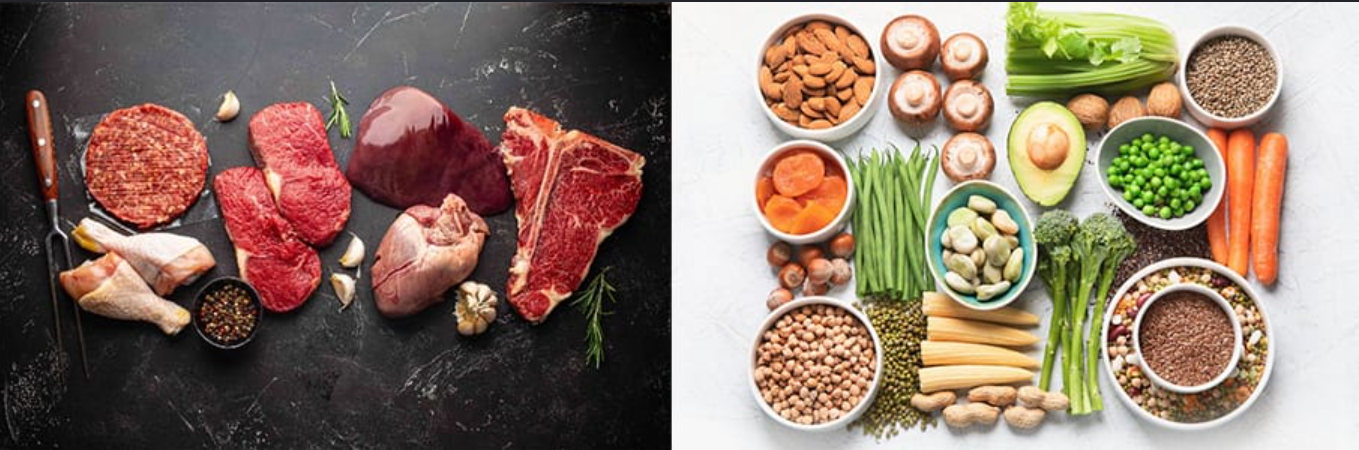
Animal proteins, particularly dairy proteins, can produce strong muscle protein synthesis responses because of their amino-acid composition and leucine content. Some plant proteins may require a larger serving to provide a comparable amount of essential amino acids.
This does not necessarily translate into inferior long-term muscle growth.
A bodybuilder eats meals—not isolated amino acids. Total daily protein, total calories, training quality and recovery all contribute to the final result.
Research comparing plant and animal protein has found some differences in muscle mass outcomes, particularly when non-soy plant proteins are compared with animal proteins. However, differences in strength have generally been less consistent. A recent systematic review and meta-analysis found that animal protein had a small advantage for muscle mass over some non-soy plant proteins, while no significant overall difference was found for muscle strength. Interestingly, soy protein performed similarly to milk protein for muscle mass in the pooled analysis.
For bodybuilding, this suggests that plant protein quality and quantity matter more than simply labeling a diet vegan or omnivorous.
The Importance of Calories
Protein gets most of the attention, but calories are equally important.
A bodybuilder attempting to gain muscle needs enough energy to support training and tissue growth. Someone eating a vegan diet can sometimes consume very large amounts of high-fiber foods that are filling but relatively low in calories.
This can make gaining weight difficult for some athletes.
Adding calorie-dense foods such as oats, rice, pasta, nut butters, avocado, nuts, seeds, olive oil and soy products can help.
Conversely, a vegan diet can be useful during a cutting phase because high-fiber foods can provide substantial food volume for relatively few calories.
The ideal diet therefore depends partly on the bodybuilding goal.
Micronutrients Deserve Attention
Vegan bodybuilders need to pay particular attention to several nutrients.
Vitamin B12 is especially important because reliable natural sources are limited in vegan diets. Iron, zinc, calcium, iodine, vitamin D and omega-3 fatty acids can also require careful dietary planning.
This does not mean vegan diets are inherently deficient. It means that removing animal foods removes some convenient sources of particular nutrients.
Fortified foods and appropriate supplements can help fill nutritional gaps. A registered dietitian or sports nutrition professional can be particularly useful for competitive athletes following a strict vegan diet.
Which Diet Builds More Muscle?
There is no convincing evidence that simply eating meat automatically makes someone a better bodybuilder.
The bigger determinants are training quality, calorie intake, protein intake, sleep, recovery and long-term adherence.
A bodybuilder eating steak and chicken but consuming inadequate calories and protein will not magically outperform a vegan bodybuilder who carefully meets nutritional requirements.
Likewise, a vegan bodybuilder eating mostly vegetables and fruit while neglecting protein will probably struggle to maximize muscle growth.
The difference is largely in execution.
A high-protein vegan diet can work. A high-protein omnivorous diet can work. Both can be poorly constructed.
Which Diet Is Better for Bodybuilding?
For maximum convenience, a meat-based diet has an obvious advantage. High-quality protein is readily available, protein density is high and foods such as chicken, lean beef, eggs, fish and whey make hitting bodybuilding protein targets relatively easy.
For someone committed to veganism, however, there is no reason to assume that muscle growth is impossible.
The evidence increasingly supports the idea that a carefully planned, high-protein vegan diet can support muscle hypertrophy and strength. In a controlled study, vegan participants consuming approximately 1.6 g/kg/day of protein achieved similar resistance-training adaptations to omnivores consuming a protein-matched diet.
Ultimately, the best bodybuilding diet is the one that allows the athlete to consistently consume adequate protein and calories, train hard, recover properly and maintain the diet over the long term.
The Bottom Line
Meat is not required to build an impressive physique.
Animal-based diets make meeting protein and certain micronutrient requirements easier, while vegan diets can provide abundant plant foods, fiber and a wide range of nutrients. The vegan bodybuilder simply needs to be more deliberate about protein quantity, protein quality and micronutrient coverage.
For most lifters, the real question should not be “Meat or plants?”
It should be: Can this diet consistently provide enough protein, calories and nutrients to support hard training and recovery?
If the answer is yes, both approaches can work.
CLICK HERE TO JOIN IN ON THE DISCUSSION IN OUR FORUM!
References
- Hevia-Larraín et al. High-Protein Plant-Based Diet Versus a Protein-Matched Omnivorous Diet to Support Resistance Training Adaptations. PubMed. View the study on PubMed
- Askow et al. Impact of Vegan Diets on Resistance Exercise-Mediated Myofibrillar Protein Synthesis. PubMed. View the study on PubMed
- Cárcamo-Regla et al. Efficacy of Resistance Training in Adults Following Vegan Versus Omnivorous Diets. PubMed. View the study on PubMed
- Morton et al. Protein Supplementation and Resistance Training: Systematic Review and Meta-Analysis. PubMed. View the study on PubMed
- Jäger et al. International Society of Sports Nutrition Position Stand: Protein and Exercise. View the position stand
- Ramos-Romero et al. Plant Versus Animal Protein for Muscle Health: Systematic Review and Meta-Analysis. PubMed. View the study on PubMed