Social Media’s Perfect Muscular Body May Be Fueling Disordered Eating
Social media’s muscular body ideal may be contributing to body dissatisfaction, muscle dysmorphia, rigid dieting, compulsive exercise, and disordered eating.
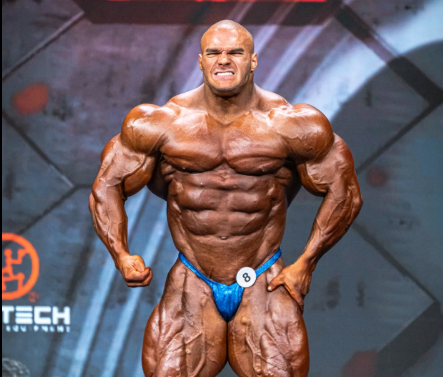
The ideal male body has changed dramatically over the past several decades. The thin, athletic physique once promoted by mainstream media has increasingly been replaced by something more extreme: broad shoulders, large arms, a narrow waist, highly visible abdominal muscles, and exceptionally low body fat.
Social media has made this image almost impossible to escape.
Instagram, TikTok, YouTube and other platforms are filled with fitness influencers, bodybuilders, transformation photographs, workout videos and “what I eat in a day” content. At first glance, much of this content appears healthy. It promotes exercise, protein-rich foods, discipline and an active lifestyle.
But there is another side to the fitness revolution.
For some people, the pursuit of muscularity can become obsessive. Eating may become governed by rigid rules. Exercise may continue despite exhaustion or injury. Missing a workout can produce intense anxiety. A person may become convinced that they are too small or insufficiently muscular even when they are objectively very muscular.
Researchers increasingly refer to these patterns as muscularity-oriented disordered eating and, in more severe cases, muscle dysmorphia.
The new body ideal
Traditional discussions about eating disorders have often focused on the desire to become thinner. However, researchers have increasingly recognized that many men—and some women—are pursuing a different ideal.
They do not necessarily want to weigh less.
They want to become bigger, more muscular and leaner at the same time.
This creates a complicated physical goal. Building substantial muscle generally requires adequate nutrition and time, while maintaining extremely low levels of body fat can require dietary restriction. The result can be a cycle of bulking, cutting, overeating, restriction and increasingly rigid food rules.
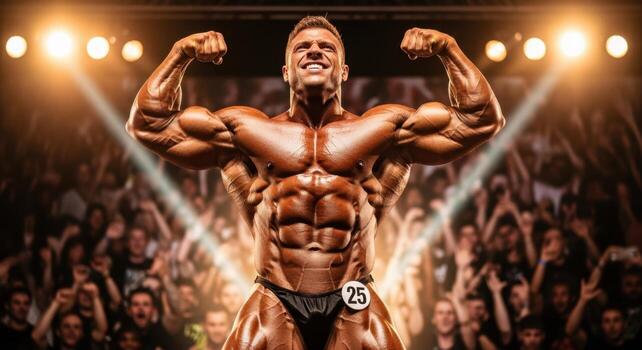 A review of muscularity-oriented eating disorders noted that men can experience eating-disorder symptoms through behaviors specifically designed to increase muscularity, including rigid dieting, excessive exercise and problematic use of appearance- and performance-enhancing substances.
The problem is that these behaviors can be socially rewarded.
Someone who spends hours in the gym may be described as disciplined. Someone who weighs every meal may be praised for dedication. Someone who refuses to eat certain foods may be considered exceptionally committed to fitness.
The same behavior can therefore look healthy from the outside while becoming psychologically unhealthy underneath.
Social media changes the comparison game
People have always compared themselves with others, but social media has dramatically increased the opportunities to do so.
Instead of seeing a few idealized bodies in magazines or advertisements, users can now see hundreds of them every day.
More importantly, social media algorithms can repeatedly deliver similar content once someone begins interacting with it. A person who watches bodybuilding videos may quickly find their feed dominated by muscular physiques, dieting advice, supplements, workout routines and transformation photographs.
This creates an environment where an unusual physique can begin to look normal.
A systematic review and meta-analysis published in 2025 examined the relationship between social-media social comparison, body-image concerns and eating-disorder symptoms. The researchers found an association between social comparison on social media and negative body-image and eating-disorder outcomes.
Another meta-analysis examining experimental and longitudinal research found that exposure to appearance-ideal images produced a moderate negative effect on body image.
The issue is therefore not simply that people see attractive bodies.
It is that they can repeatedly compare their ordinary, unfiltered appearance with carefully selected images representing someone’s best possible appearance.
The muscular body is often presented as effortless
One of the most misleading elements of fitness social media is the appearance of effortlessness.
A photograph may show a person with enormous muscles and extremely low body fat, but the viewer rarely sees the complete context behind that photograph.
Lighting, posing, dehydration, camera angles, image selection and editing can dramatically change someone’s appearance. Some influencers may also have years of training behind them. Others may use professional photography, supplements or performance-enhancing drugs.
Yet viewers frequently see only the final image.
This can create unrealistic expectations.
A young man might look at a highly muscular influencer and conclude that his own body is inadequate. Instead of recognizing the image as an exceptional example, he may interpret it as the standard he should achieve.
The result can be constant dissatisfaction.
When healthy eating becomes an obsession
Disordered eating does not always look like starvation.
For someone pursuing muscularity, it may look like extreme control over food.
Meals may need to contain exact amounts of protein, carbohydrates and fat. Certain foods may become completely forbidden. Eating at a restaurant can produce anxiety because the nutritional content is uncertain.
Some individuals may repeatedly check their weight, body-fat percentage or appearance in the mirror. Others may compensate for eating something they consider “bad” by exercising excessively.
These behaviors exist on a spectrum. Following a structured nutrition plan or tracking protein intake does not automatically mean someone has an eating disorder.
The warning signs emerge when food and exercise begin controlling someone’s life rather than supporting it.
Muscle dysmorphia: never feeling muscular enough
One particularly important condition in this discussion is muscle dysmorphia.
Muscle dysmorphia involves a persistent preoccupation with the belief that one’s body is insufficiently muscular. Someone experiencing it may actually be highly muscular while continuing to perceive themselves as too small.
This can lead to compulsive behaviors.
A person might repeatedly check their muscles in mirrors, avoid situations where their physique will be visible, constantly compare themselves with other men, spend excessive amounts of time exercising or follow increasingly restrictive diets.
Research has found a strong relationship between muscle dysmorphia and eating-disorder symptoms. A systematic review and meta-analysis specifically examined this relationship and found substantial evidence connecting muscle dysmorphia with eating-disorder symptomatology.
Muscle dysmorphia is currently classified within body dysmorphic disorder rather than as a standalone eating disorder. Nevertheless, its behavioral overlap with disordered eating and compulsive exercise makes it particularly relevant to the modern fitness environment.
The social-media connection is becoming clearer
Newer research is beginning to examine the specific relationship between muscularity-focused social media content and muscle dysmorphia.
A 2025 study of 1,553 boys and men in Canada and the United States found strong positive associations between viewing muscularity-oriented social-media content and probable muscle dysmorphia. The associations remained significant even after accounting for total time spent on social media.
Interestingly, the research did not only examine photographs of muscular bodies. It also examined content involving muscle-building dietary supplements and anabolic-androgenic steroids.
This matters because modern fitness content often combines appearance with consumption.
The message can become:
You are not muscular enough—and this product, diet or program can fix that.
That creates an enormous commercial opportunity.
Fitness culture can blur the line between health and appearance
Exercise itself is not the problem.
Strength training has numerous physical and psychological benefits. Eating adequate protein, exercising regularly and maintaining a healthy body composition can all be positive goals.
The problem begins when health becomes secondary to appearance.
A person may continue dieting even after reaching a healthy weight because they believe they need to become leaner. They may continue increasing training volume because they fear losing muscle. Rest days can become frightening. Social activities may be sacrificed because they interfere with a diet or training schedule.
Eventually, the behavior that was supposed to improve quality of life can begin reducing it.
That distinction is crucial.
Healthy fitness should generally expand a person’s life. Disordered fitness can gradually shrink it.
Men are not immune to eating disorders
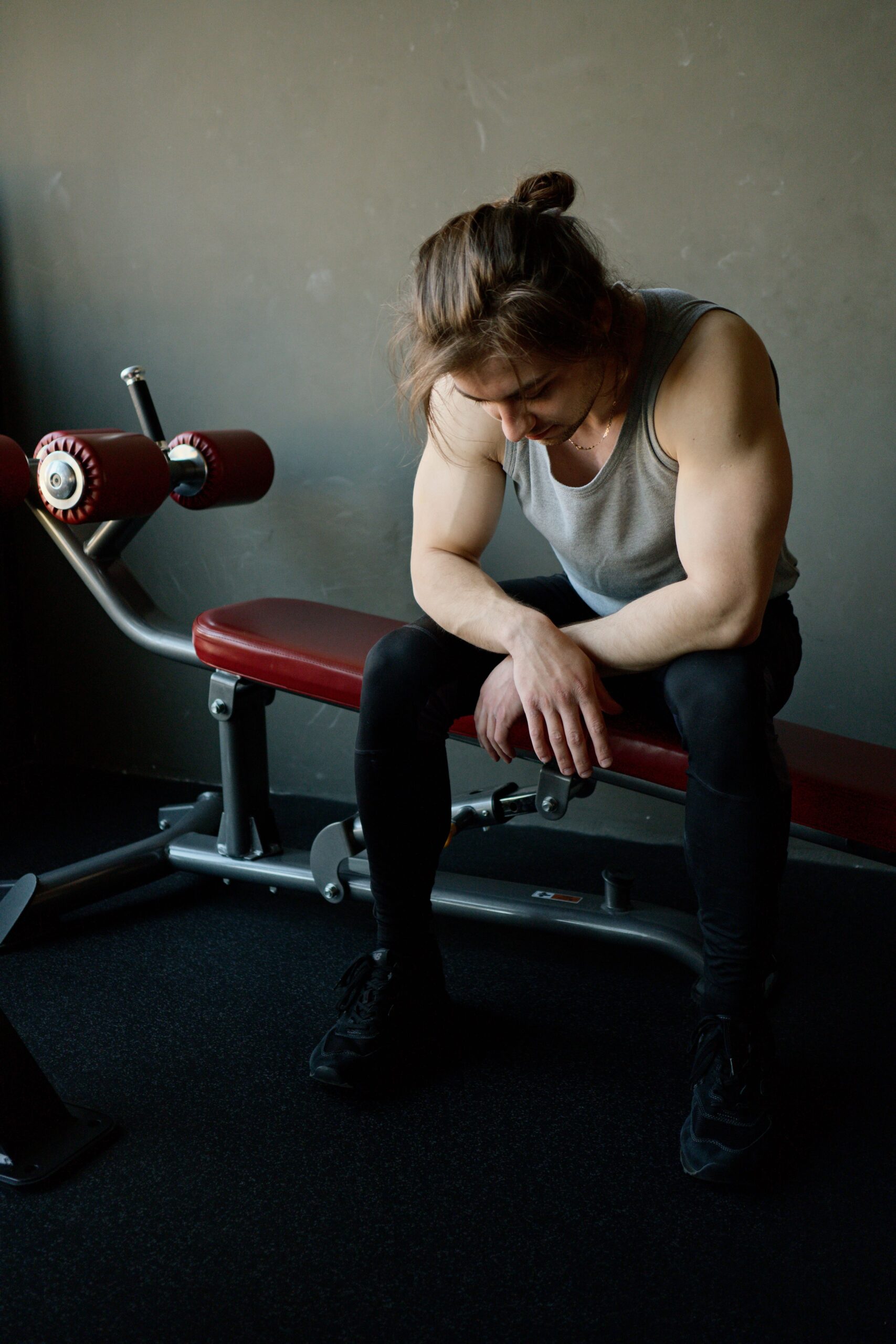
For years, eating disorders were commonly associated with women and thinness.
That stereotype has made it easier for muscularity-related problems in men to go unnoticed.
A man who is eating extremely restrictively may not appear to fit the traditional image of someone with an eating disorder. If he is muscular and exercising regularly, friends and family may even compliment his discipline.
Research, however, increasingly shows that eating-disorder symptoms and body-image problems are significant concerns among men.
Social media may reinforce this problem because muscularity is often presented as evidence of masculinity, self-control and success.
The psychological pressure can therefore become particularly complicated.
A man may not simply believe that he needs a better body. He may believe that becoming more muscular will make him more confident, attractive, respected or masculine.
The problem is not social media alone
It would be too simplistic to claim that social media causes eating disorders.
Eating disorders are complex conditions involving biological, psychological, social and environmental factors.
Research also has limitations. Many studies examining social media and eating disorders are observational or cross-sectional, meaning they cannot establish that social media directly caused someone’s symptoms.
A 2026 systematic review examining social media, orthorexia nervosa and muscle dysmorphia included 22 quantitative studies. The researchers found evidence linking social-media exposure and these concerns, but also emphasized the limitations of the existing evidence, including the large number of cross-sectional studies.
Social media may therefore be one factor among many rather than a single cause.
Nevertheless, the consistent relationship between appearance-focused content, social comparison and body dissatisfaction deserves attention.
A healthier definition of fitness
The solution is not to eliminate fitness content.
Instead, social media users need a more realistic understanding of what they are seeing.
A muscular photograph is not necessarily a representation of everyday life. A transformation photograph represents a selected moment. A fitness influencer’s diet may not be appropriate for another person’s body, lifestyle or health needs.
Most importantly, physical appearance should not become the sole measurement of health.
Fitness should include strength, cardiovascular health, mobility, energy, sleep, psychological well-being and the ability to participate in everyday life.
A person can be extremely fit without having visible abdominal muscles.
A person can eat carbohydrates without destroying their physique.
A rest day is not failure.
And a body does not have to resemble an Instagram model to be healthy.
The future of the fitness conversation
The growing recognition of muscularity-oriented disordered eating represents an important shift in how eating disorders and body image are understood.
The modern body-image problem is no longer simply about being thin.
For some people, it is about being simultaneously bigger, leaner and more muscular—and never feeling that they have reached the goal.
Social media can intensify that dissatisfaction by providing an endless stream of idealized bodies and opportunities for comparison.
Recent research supports an association between appearance-focused social media, body dissatisfaction, disordered eating and muscle dysmorphia, although researchers continue to investigate exactly how these relationships develop.
The fitness industry has an opportunity to respond by promoting sustainable training, realistic expectations and health rather than constant dissatisfaction.
The goal of exercise should ultimately be to build a stronger body and a better life—not to create a person who is permanently afraid that they are not muscular enough.
CLICK HERE TO JOIN IN ON THE DISCUSSION IN OUR FORUMS!
References
- Holland, G., & Tiggemann, M. (2016). A systematic review of the impact of the use of social networking sites on body image and disordered eating outcomes. Body Image. PubMed reference
- Bonfanti, R. C., et al. (2025). The association between social comparison in social media, body image concerns and eating disorder symptoms: A systematic review and meta-analysis. Body Image. PubMed reference
- Ganson, K. T., et al. (2025). Associations between muscularity-oriented social media content and muscle dysmorphia among boys and men. Body Image. PubMed reference
- Vintró-Alcaraz, C., et al. (2026). Idealized Body Images and Fitness Lifestyles on Social Media: A Systematic Review Exploring the Link Between Social Media Use and Symptoms of Orthorexia Nervosa and Muscle Dysmorphia. European Eating Disorders Review. PubMed reference
- Lavender, J. M., et al. Men, Muscles, and Eating Disorders: An Overview of Traditional and Muscularity-Oriented Disordered Eating. Full-text article
- Badenes-Ribera, L., et al. (2019). The association between muscle dysmorphia and eating disorder symptomatology: A systematic review and meta-analysis. Journal of Behavioral Addictions. PubMed reference
- Fioravanti, G., et al. Social media, body image, and the question of causation: Meta-analyses of experimental and longitudinal evidence. Body Image. PubMed reference