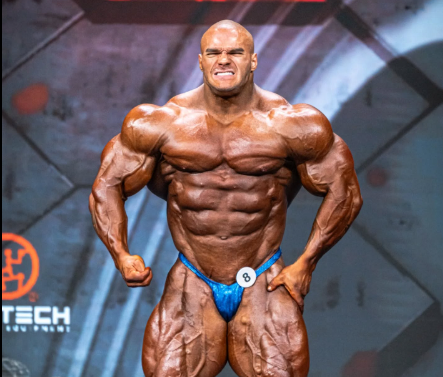
November is the time to turn consistent training, smart nutrition, and proper recovery into measurable muscle-building progress.
As the year approaches its final weeks, many bodybuilders begin evaluating their physiques, reviewing their training progress, and planning their next phase of development. November offers an excellent opportunity to refocus on the fundamentals of muscle growth before the holidays disrupt normal routines and the New Year brings another wave of ambitious fitness goals.
Whether you’re an experienced lifter looking to add quality mass or an intermediate bodybuilder trying to overcome a plateau, the next several weeks can be productive. However, making meaningful progress requires more than simply lifting heavier weights or eating everything in sight. Effective muscle growth depends on progressive resistance training, adequate nutrition, sufficient recovery, and the discipline to repeat those behaviors consistently.
The goal isn’t to transform your physique overnight. It’s to finish the year stronger, better conditioned, and more muscular than when November began.
1. Establish a Clear Muscle-Building Goal
Before changing your workout routine, establish what you want to accomplish over the next four to eight weeks.
Some bodybuilders will benefit from a controlled gaining phase, while others may need to prioritize fat loss or maintain their current body weight while improving strength and muscular development. The right approach depends on your training experience, current body composition, health, and long-term objectives.
For those pursuing muscle growth, gaining weight gradually is generally more manageable than attempting an aggressive bulk. A large calorie surplus can increase body fat without proportionally increasing muscle growth.
 Start by reviewing your current body weight, average food intake, training performance, and progress photographs. Use these measurements to establish a baseline rather than relying entirely on the mirror or daily fluctuations on the scale.
Your November objectives might include improving performance on several compound exercises, consistently meeting your protein target, adding productive training volume, or gradually increasing body weight.
Choose a handful of measurable targets and track them throughout the month. A clear objective makes it easier to distinguish genuine progress from temporary changes in body weight, muscle fullness, or motivation.
2. Train for Progressive Overload, Not Just Exhaustion
Progressive overload remains one of the central principles of successful bodybuilding. Muscles adapt to training, and continued development requires an appropriate increase in the challenge placed upon them over time.
However, progressive overload doesn’t mean adding weight to every exercise during every workout. Improvements can also come from performing additional repetitions with the same load, completing more high-quality sets, improving technique, or achieving a greater controlled range of motion.
Consider the bench press as an example. If you can perform three sets of eight repetitions with a particular weight and sound technique, gradually working toward three sets of ten may provide a useful progression. Once you can perform the additional repetitions comfortably and consistently, a modest increase in weight may be appropriate.
The key is to make progress without sacrificing execution.
A 2026 American College of Sports Medicine position stand reviewed 137 systematic reviews involving more than 30,000 participants. Its findings support progressive resistance training and emphasize that effective programs can use different equipment, loading strategies, and exercise selections. Higher weekly training volume can help optimize muscle hypertrophy, although individual needs vary.
For bodybuilders, this means a complicated program isn’t automatically better than a straightforward one. The best routine is one you can perform consistently, recover from adequately, and progressively improve.
3. Build Your Routine Around Productive Exercises
November isn’t the time to abandon a productive training program simply because a new routine looks exciting on social media.
Instead, review your current exercise selection and identify opportunities to improve it.
A balanced bodybuilding program typically includes movements that challenge the major muscle groups through appropriate ranges of motion. Depending on individual needs and equipment availability, these may include presses, rows, pulldowns, squats or leg presses, hip hinges, curls, triceps extensions, lateral raises, and calf exercises.
Compound exercises allow several muscle groups to work together, while isolation exercises help target particular muscles that may need additional attention.
For example, a bodybuilder seeking greater shoulder development might retain pressing movements while incorporating lateral raises to emphasize the side deltoids. Someone whose back development has stalled might review rowing technique, pulling volume, exercise selection, and recovery before adding more exercises.
Training frequency should fit your schedule and ability to recover. Working each major muscle group at least twice weekly is a practical option for many lifters, although other schedules can also produce results when weekly training volume and effort are appropriate.
Avoid turning every session into a marathon. More exercises and longer workouts don’t necessarily produce better results.
The objective is to provide enough effective training stimulus to encourage adaptation without accumulating so much fatigue that subsequent workouts suffer.
4. Eat Enough to Support Muscle Growth
Training provides the stimulus for muscle development, but nutrition supplies the energy and raw materials needed to support it.
Bodybuilders attempting to gain muscle generally need sufficient calories, protein, carbohydrates, and dietary fats. Consistently eating too little can make recovery and muscle growth more difficult, particularly when training volume is high.
Begin by establishing your approximate maintenance calorie intake. If muscle gain is the priority, a modest calorie surplus may be appropriate. Monitor average body weight and training performance over several weeks, adjusting food intake according to the results.
Protein deserves particular attention because it supplies the amino acids required for muscle repair and growth.
The International Society of Sports Nutrition identifies approximately 1.4–2.0 grams of protein per kilogram of body weight per day as sufficient for most exercising individuals. For many resistance-trained bodybuilders, aiming toward the middle or upper portion of that range is a practical starting point.
For example, a person weighing 80 kilograms might aim for approximately 128–160 grams of protein daily.
Good protein sources include eggs, chicken, fish, lean meat, dairy products, beans, lentils, and other suitable foods. Protein supplements can provide convenience, but they aren’t mandatory if daily requirements can be met through regular meals.
Distributing protein across several meals is another practical strategy. Rather than trying to consume nearly all your protein at dinner, build a consistent intake into breakfast, lunch, dinner, and snacks as needed.
Carbohydrates also matter. Rice, oats, potatoes, bread, fruit, and other carbohydrate-rich foods help supply energy for demanding workouts. Dietary fats contribute essential fatty acids and support normal physiological functions.
The most effective nutrition plan is one that provides adequate energy and nutrients while remaining affordable, enjoyable, and sustainable.
5. Stop Confusing Eating More With Building More Muscle
The traditional bodybuilding bulk often involves eating enormous quantities of food in the belief that more calories automatically produce more muscle.
That approach can backfire.
Although a calorie surplus can support muscle gain, the body has limits on how quickly it can build new muscle tissue. Once energy intake substantially exceeds what is useful for training and growth, additional calories can contribute disproportionately to fat gain.
Excessive bulking can create a different problem later: an extended cutting phase that reduces training performance and makes maintaining muscle more challenging.
A more controlled approach involves eating enough to support productive training while monitoring changes in body weight, waist measurements, strength, and appearance.
If body weight is rising rapidly but gym performance isn’t improving meaningfully, reconsider whether the calorie surplus is larger than necessary. Conversely, if weight is consistently falling during a muscle-gaining phase and recovery is deteriorating, total food intake may be insufficient.
Remember that daily weight changes reflect water, glycogen, sodium, and digestive contents as well as changes in tissue. Evaluate trends over multiple weeks rather than reacting to a single morning’s weigh-in.
The objective is not to eat the most food possible. It’s to provide the body with the resources required to support sustainable development.
6. Make Recovery Part of Your Training Program
Muscle growth doesn’t depend solely on what happens inside the gym. Recovery determines how effectively the body can respond to repeated training sessions.
Sleep is one of the most important components of this process. Most adults should aim for seven to nine hours of sleep per night, with individual requirements varying.
Insufficient sleep can impair concentration, training quality, mood, and the ability to recover from demanding exercise. Establishing a consistent bedtime, limiting late-night stimulation, and maintaining a comfortable sleeping environment can help.
Rest days also serve a purpose. They provide an opportunity to recover from accumulated fatigue while maintaining a productive long-term training schedule.
If performance declines across several sessions, persistent soreness develops, or motivation and sleep deteriorate, consider whether your current workload exceeds your recovery capacity.
The solution isn’t always to push harder. Sometimes reducing training volume temporarily, improving sleep, or increasing food intake can produce better results than adding another workout.
Cardiovascular exercise can remain part of a bodybuilding program. Moderate amounts support cardiovascular fitness and general health, although excessive conditioning combined with insufficient food and recovery can complicate muscle-gaining goals.
Recovery should be treated as a planned component of training rather than something left to chance.
7. Use Supplements Strategically
 The supplement industry regularly promotes products promising faster muscle growth, greater strength, and improved recovery. However, supplements cannot compensate for inconsistent training, inadequate nutrition, or poor sleep.
Start with the fundamentals before spending money on additional products.
Protein powder can help people meet their daily protein requirements. Creatine monohydrate is another well-researched option that can support high-intensity exercise performance and improvements in strength and lean mass when combined with resistance training.
Caffeine may improve workout performance for some people, but its effects vary, and consuming it too late in the day can interfere with sleep.
Supplements should be selected according to evidence, individual tolerance, medical considerations, and budget. Check product quality and ingredient labels, and remember that dietary supplements are not risk-free.
Be especially cautious with products making dramatic promises about hormone levels, rapid transformations, or steroid-like effects. Claims in marketing materials don’t necessarily reflect the quality of the available scientific evidence.
An effective supplement strategy is usually relatively simple. Consistent nutrition, structured training, and adequate recovery remain the foundation.
8. Don’t Let the Holiday Season Destroy Your Momentum
November introduces a challenge that has little to do with exercise science: maintaining consistency as social events, travel, changing schedules, and holiday meals begin to interfere with established routines.
The solution is to plan ahead rather than rely entirely on motivation.
If you know you’ll have a busy week, schedule your workouts in advance. When time is limited, a shorter session covering the major movements in your program may be more useful than skipping training altogether.
Maintain reasonable eating habits without treating every social meal as a setback. One large dinner won’t destroy months of progress, just as one excellent workout won’t transform your physique.
What matters is the pattern of behavior repeated over time.
Prepare convenient meals when possible, keep suitable protein sources available, and avoid allowing a disrupted routine to become several weeks of inactivity.
You also don’t need to pursue perfect adherence. A sustainable plan accommodates real life while preserving the habits that matter most.
If you miss a workout, resume your normal schedule. If your diet changes during a celebration, return to your usual eating pattern at the next meal.
Consistency is not the absence of interruptions. It’s the ability to return to productive habits after them.
9. Measure Progress Beyond the Mirror
Bodybuilding progress can be difficult to judge when you inspect your physique every day. Lighting, hydration, carbohydrate intake, and temporary muscle fullness can influence how muscular you appear.
Use several measurements to develop a more accurate picture.
Record your training performance, average weekly body weight, and occasional photographs taken under similar conditions. Waist measurements may also help distinguish changes in overall size from changes in body composition.
Pay attention to technique and exercise performance as well. Lifting more weight with controlled execution is meaningful, even when visual changes are gradual.
However, stronger performance doesn’t automatically guarantee muscle growth. Strength can improve through neurological adaptations, better technique, and increased familiarity with an exercise. Consider multiple indicators rather than relying on one measurement.
Set realistic expectations. Experienced bodybuilders generally gain muscle more slowly than beginners, and individual responses vary considerably.
A successful November may not produce a dramatic transformation. It might instead deliver improved performance, better eating habits, more consistent sleep, and a training routine that is finally moving in the right direction.
Those improvements create a stronger foundation for the months ahead.
The Bottom Line: Finish the Year Stronger
November is an opportunity to turn bodybuilding intentions into consistent action.
Focus on progressive resistance training, a sensible calorie intake, sufficient protein, adequate sleep, and a routine that fits your lifestyle. Track your performance, make adjustments when necessary, and resist the temptation to replace proven fundamentals with extreme diets or complicated training methods.
Most importantly, recognize that muscle growth is a long-term process. Four weeks can establish momentum and produce measurable improvements, but substantial changes in muscular development require continued effort beyond the end of the year.
The bodybuilders who make the most progress aren’t necessarily those who train the longest or spend the most money on supplements. They’re the ones who repeatedly apply the fundamentals, evaluate their results, and make intelligent adjustments.
Use November to build habits that will carry into December and beyond. Instead of waiting for January to begin another fitness resolution, start now—and enter the New Year with a stronger foundation, a clearer plan, and measurable progress already underway.
CLICK HERE TO JOIN IN ON THE DISCUSSION IN OUR FORUMS!
References
- American College of Sports Medicine. Resistance Training Guidelines and 2026 Evidence Review.
- International Society of Sports Nutrition. Position Stand: Protein and Exercise.