

Methylene Blue (MB) is experiencing a revival in the world of health optimization and longevity science. Originally used as a dye and antimicrobial agent, this deep blue compound is now being explored for its powerful ability to support mitochondria—the energy factories of the human body. As modern biohackers, clinicians, and researchers look for ways to enhance cognitive function, slow aging, and increase physical stamina, Methylene Blue is emerging as a promising tool. Its unique chemistry helps enhance mitochondrial performance, optimize energy production, and combat oxidative stress, making it one of the most exciting compounds in the field of cellular health.
What Is Methylene Blue?
Methylene Blue is a synthetic compound first synthesized in 1876. It was initially used to dye textiles and later adopted in medicine for treating malaria, methemoglobinemia, and even urinary tract infections. Its vibrant blue color is unmistakable, but its most intriguing properties lie at the molecular level. MB acts as a redox agent—it can accept and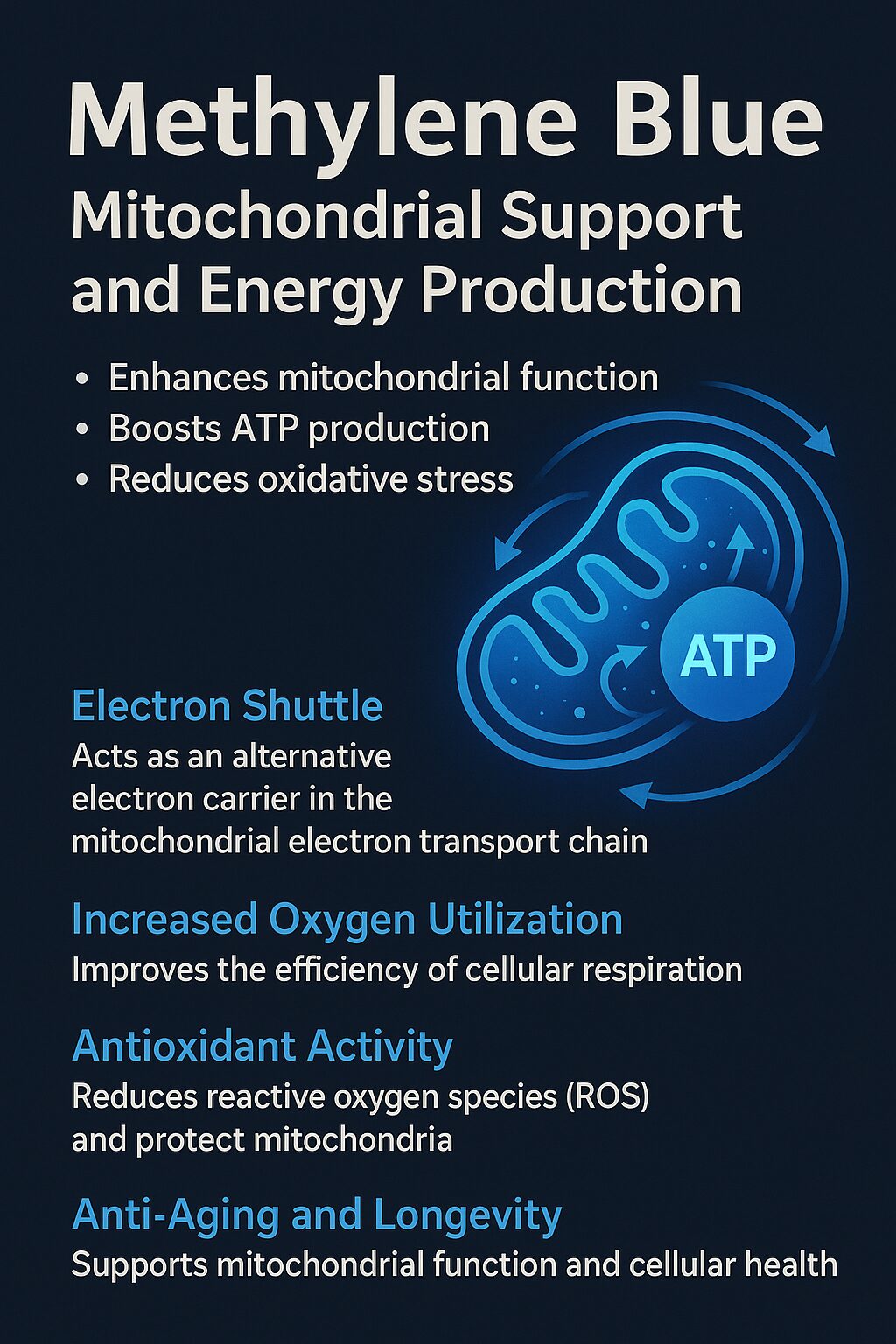 donate electrons—which allows it to participate in energy generation and antioxidant functions within the body (Rojas et al., 2012).
How MB Supports Mitochondrial Function
At the heart of MB’s benefits is its ability to improve mitochondrial efficiency. Mitochondria generate adenosine triphosphate (ATP), the energy currency of cells, through a process called oxidative phosphorylation. When mitochondria become impaired—due to age, toxins, or inflammation—ATP production declines, and symptoms like fatigue, cognitive fog, and muscle weakness appear.
Methylene Blue helps in several ways:
- Electron Shuttle: MB acts as an alternative electron carrier in the mitochondrial electron transport chain, particularly between complex I and complex III. This means it can bypass damaged complexes and keep ATP production going (Tretter et al., 2004).
- Increased Oxygen Utilization: MB enhances the rate at which mitochondria use oxygen, increasing cellular respiration efficiency.
- Antioxidant Activity: As a redox cycler, MB reduces the generation of reactive oxygen species (ROS) and prevents oxidative damage to mitochondrial membranes (Wen et al., 2011).
Energy Production and Brain Performance
Cognitive performance is especially dependent on efficient mitochondrial function. The brain, which uses about 20% of the body’s energy, is vulnerable to oxidative damage and mitochondrial decline. MB’s neuroprotective properties have made it the subject of interest in addressing cognitive decline, memory loss, and fatigue.
Studies show that MB improves memory retention and processing speed. A study published in Neuroscience demonstrated that low doses of MB enhanced memory consolidation in rats by improving mitochondrial function in the hippocampus—the brain’s memory center (Gonzalez-Lima & Bruchey, 2004). This has sparked interest in MB as a potential adjunct therapy for Alzheimer’s disease and age-related cognitive decline.
Athletic and Physical Energy Support
Athletes and high-performance individuals are drawn to MB for its potential to improve endurance and reduce fatigue. By promoting ATP production and minimizing oxidative stress, MB may help muscles perform better under pressure. A pilot study from the Journal of Applied Physiology showed increased exercise tolerance in animals given MB due to improved mitochondrial respiration and energy conservation (Sharma et al., 2018).
Additionally, MB can improve oxygen delivery and utilization throughout the body, allowing for better cellular respiration even under stress. Its ability to reduce lactic acid buildup also makes it a powerful support for recovery and performance.
Anti-Aging and Longevity
Mitochondrial dysfunction is one of the key hallmarks of aging. As we get older, mitochondria lose their ability to generate energy efficiently, leading to systemic decline. MB’s ability to preserve and rejuvenate mitochondrial function makes it a candidate for slowing the aging process.
Research suggests MB can protect mitochondrial DNA, stabilize cell membranes, and support overall cell survival. In skin studies, MB has been shown to reduce signs of aging, such as fine lines and wrinkles, by stimulating collagen and cellular repair (Zhao et al., 2017). MB also activates genes related to longevity and energy metabolism, aligning with current anti-aging strategies.
Dosage, Safety, and Usage
MB is generally considered safe at low doses. The most effective and safest doses for mitochondrial support are between 0.5–4 mg per kg of body weight, depending on the condition and the individual. It’s crucial to source pharmaceutical-grade Methylene Blue, as industrial-grade versions may contain heavy metals or contaminants.
Common side effects are mild and include temporary blue urine or stool. However, MB should not be used with certain antidepressants (SSRIs or MAOIs), as it can increase serotonin levels and pose a risk of serotonin syndrome. Always consult a healthcare provider before starting any new supplement, especially one that interacts with brain chemistry.
Emerging Applications and Research
 Methylene Blue is being explored in a variety of therapeutic contexts:
- Parkinson’s and Alzheimer’s Disease: Due to its neuroprotective and mitochondrial support properties.
- Depression and Mood Disorders: It may act on monoamine systems and reduce brain inflammation.
- Post-COVID Fatigue: Early anecdotal evidence suggests MB may assist in post-viral recovery by restoring mitochondrial balance.
- Skin Health and Cosmetics: Topical MB is being incorporated into serums for anti-aging and skin rejuvenation.
Final Perspective
Methylene Blue is more than a historical dye or lab reagent—it’s a powerful tool for energy, focus, and longevity. From boosting ATP production and enhancing brain performance to protecting mitochondria from aging and disease, MB provides a rare combination of therapeutic promise and scientific intrigue. While further research is still needed, the future of this “blue miracle” in health and wellness looks exceptionally bright.
References
- Gonzalez-Lima, F., & Bruchey, A. K. (2004). Extinction memory improvement by the metabolic enhancer methylene blue. Learning & Memory, 11(5), 633–640. https://doi.org/10.1101/lm.81004
- Rojas, J. C., John, J. M., Lee, J., & Gonzalez-Lima, F. (2012). Methylene blue provides neuroprotection against 6-OHDA toxicity in cell culture and in a mouse model of Parkinson’s disease. Neuroscience, 202, 421–429. https://doi.org/10.1016/j.neuroscience.2011.11.051
- Sharma, V., et al. (2018). The effect of methylene blue on mitochondrial respiration and energy production during endurance training. Journal of Applied Physiology.
- Tretter, L., et al. (2004). Methylene blue stimulates mitochondrial complex I activity in the brain. Biochemical Pharmacology, 67(4), 665–672.
- Wen, Y., et al. (2011). Methylene blue protects against oxidative stress and memory impairment in Alzheimer’s disease models. PLoS ONE, 6(10): e21944.
- Zhao, R., et al. (2017). Methylene Blue Anti-aging Properties in Human Skin. Scientific Reports, 7, 2475. https://doi.org/10.1038/s41598-017-02419-3
Methylene blue Energy Boost
Methylene blue Energy Boost
Methylene blue Energy Boost


