
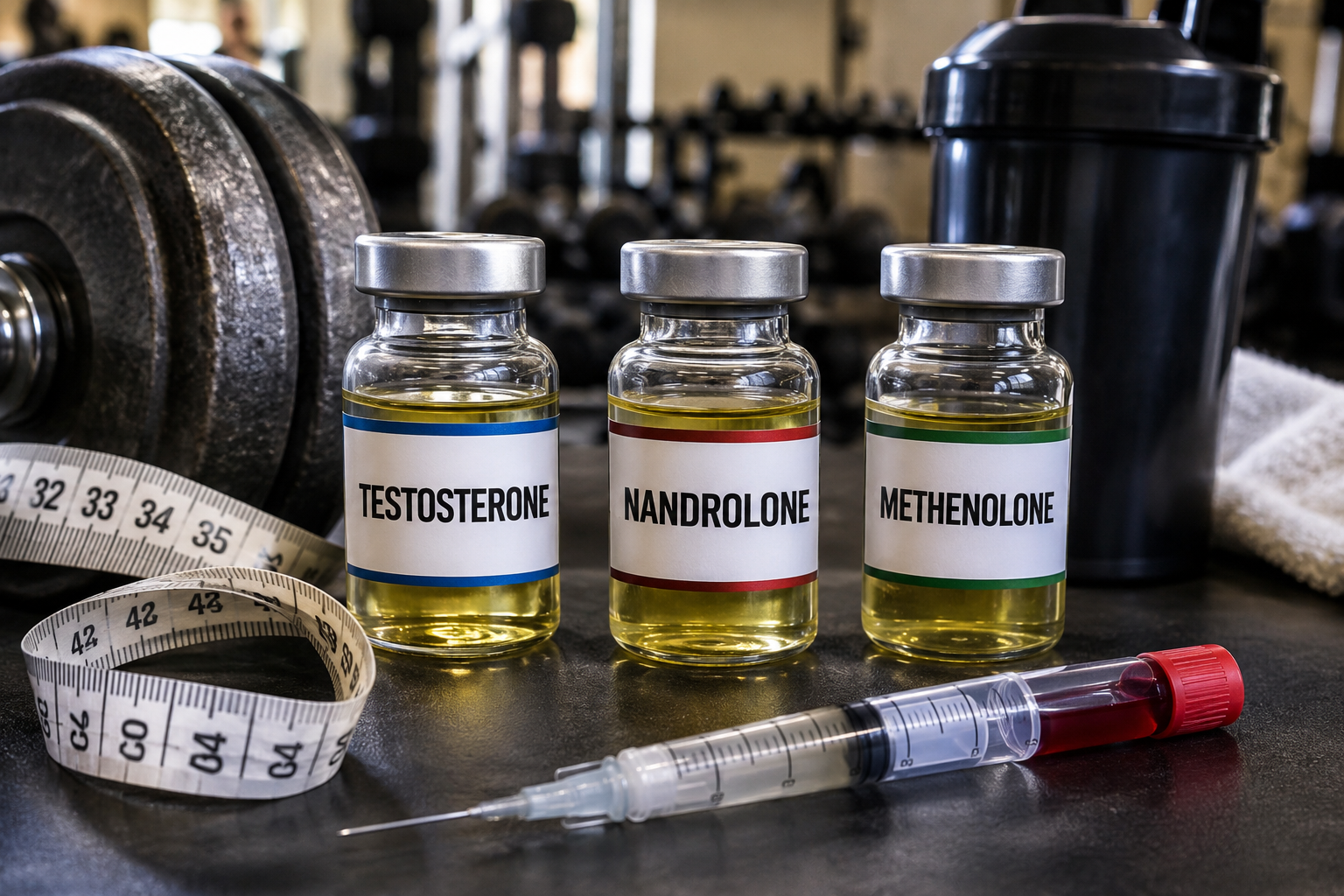
Winter has traditionally been the season when bodybuilders shift their attention from maintaining their physique to building muscle, increasing strength, and improving overall size. With fewer concerns about staying lean for the beach, many lifters take advantage of cooler weather, heavier meals, longer training sessions, and a more focused approach to gaining mass.
The concept of a winter bulk is nothing new. However, there is a significant difference between a productive offseason and simply eating everything in sight while combining multiple anabolic compounds. A proper winter approach should involve more than drugs. Training, nutrition, recovery, realistic expectations, and health monitoring all play important roles in determining whether several months of hard work actually produce quality muscle.
For those who follow bodybuilding pharmacology, three compounds frequently discussed during offseason planning are testosterone, nandrolone, and methenolone. Each has a different pharmacological profile, and none should be considered harmless simply because it has been used extensively in bodybuilding.
The Winter Growth Phase
Winter provides an opportunity to focus on progressive resistance training without the pressure of maintaining contest-level conditioning. For many bodybuilders, this means increasing training volume, gradually improving strength, and allowing body weight to increase when necessary to support muscle development.
The mistake is believing that a successful offseason requires an unlimited calorie surplus or the addition of more compounds every time progress slows. Muscle growth is a gradual process. Excessively rapid weight gain often produces more body fat than muscle, creating a longer and more difficult dieting phase later.
A productive winter phase should have measurable goals. Training performance should improve, recovery should remain manageable, body weight should increase gradually if gaining mass is the objective, and waist measurements should be monitored alongside strength.
The offseason is also an opportunity to address weaknesses. Rather than simply adding more weight to every exercise, bodybuilders can concentrate on improving lagging muscle groups, technique, exercise selection, and overall training consistency.
Three Compounds Commonly Discussed
Testosterone
Testosterone remains the central reference point in bodybuilding discussions involving anabolic steroids. It is the primary androgen produced naturally in the male body and plays an important role in muscle development, strength, libido, bone density, red blood cell production, and numerous other physiological processes.
In bodybuilding, testosterone is frequently discussed because of its anabolic properties and its influence on muscle protein synthesis, recovery, and training performance. However, testosterone is not simply a muscle-building substance without consequences.
Exogenous testosterone can suppress natural testosterone production, affect fertility, increase red blood cell production, influence blood pressure, and negatively affect cholesterol levels. It may also contribute to acne, hair loss in genetically predisposed individuals, mood changes, and estrogen-related complications.
The fact that testosterone is naturally produced by the body does not make supraphysiological exposure safe. Natural production and pharmaceutical administration at bodybuilding levels are two very different situations.
Testosterone also requires consideration of individual health factors. Blood pressure, cardiovascular history, hematocrit, lipid profile, fertility concerns, and existing hormonal abnormalities should all be discussed with a qualified medical professional before any decision involving hormone use.
Nandrolone
Nandrolone has maintained a prominent place in bodybuilding discussions for decades. It is an anabolic-androgenic steroid associated with increases in lean mass and has legitimate medical applications under specific circumstances.
Bodybuilders frequently discuss nandrolone in relation to offseason muscle development, strength, and its reputation for being less harsh on certain aspects of joint comfort. However, perceived joint relief should not be confused with actual repair of cartilage, tendons, ligaments, or underlying injuries.
Nandrolone carries significant potential risks, including suppression of natural hormonal function, changes in libido and sexual function, fertility problems, alterations in cholesterol, cardiovascular effects, and mood-related changes. Its effects on the endocrine system can also complicate recovery after discontinuation.
The compound’s long history in bodybuilding has created a great deal of anecdotal discussion. Unfortunately, anecdotes do not establish safety. Someone who reports feeling excellent while using nandrolone may still have elevated blood pressure, unfavorable lipid changes, or abnormalities that are not immediately noticeable.
A lifter considering nandrolone should understand that subjective improvements in training or recovery do not necessarily reflect what is happening internally.
Methenolone
Methenolone, commonly known by its pharmaceutical name Primobolan, has developed a reputation in bodybuilding for being associated with leaner gains and relatively modest water retention compared with certain other anabolic agents.
It is frequently discussed during offseason phases by athletes who want to build muscle while attempting to avoid excessive increases in body fat or fluid retention. Its reputation for being a comparatively mild compound, however, can create a false sense of security.
Methenolone is still an anabolic steroid. It can suppress natural testosterone production, negatively affect cholesterol levels, and contribute to cardiovascular risk. The injectable and oral forms also differ in their pharmacological characteristics, and the oral form should not be assumed to be harmless to the liver or cardiovascular system.
There is no compound that guarantees quality muscle growth without health consequences. The response to anabolic steroids varies considerably between individuals, and a compound perceived as mild may still produce significant adverse effects.
Why Combining Compounds Isn’t Automatically Better
The word stack has become synonymous with bodybuilding, but combining multiple anabolic agents introduces additional complexity. Each compound can affect blood pressure, cholesterol, hormonal regulation, cardiovascular function, mood, and other physiological systems.
Combining substances can make it difficult to determine which drug is responsible when a side effect develops. Changes in libido, sleep, blood pressure, mood, liver enzymes, or cholesterol may have several contributing factors.
More compounds also mean more variables. Adding another anabolic steroid does not guarantee additional muscle growth proportional to the increased exposure. The bodybuilding community often places considerable emphasis on theoretical synergy, but the long-term safety of many commonly discussed combinations is poorly established.
A responsible offseason approach should not treat three compounds as an automatic formula for success. Testosterone, nandrolone, and methenolone are three drugs frequently discussed in bodybuilding, not a universally appropriate combination or a medically validated winter protocol.
The objective should be improving the physique while understanding and minimizing the risks involved—not simply maximizing the number of substances involved.
Bloodwork Is Not Optional
One of the most overlooked aspects of bodybuilding drug use is the importance of laboratory testing. Many adverse effects develop without obvious symptoms. Feeling strong, having a good appetite, sleeping well, and making progress in the gym do not guarantee that cardiovascular or metabolic health is unaffected.
Bloodwork is particularly important when anabolic steroids are involved because these drugs can affect multiple systems simultaneously.
A comprehensive health assessment may include:
- Complete blood count (CBC): Evaluates hemoglobin, hematocrit, red blood cells, and other blood components. Androgen use can increase red blood cell production and hematocrit, potentially increasing blood viscosity and cardiovascular concerns.
- Lipid profile: Measures cholesterol and triglycerides, including HDL and LDL. Anabolic steroids can produce unfavorable changes in cholesterol, increasing cardiovascular risk.
- Liver function: Evaluates markers such as ALT, AST, and other relevant measurements. Certain anabolic agents can cause liver injury.
- Kidney function: Creatinine, electrolytes, and other appropriate markers can help assess renal function. Interpretation of creatinine requires caution in muscular individuals because greater muscle mass can influence results.
- Blood pressure: Regular measurement is essential because elevated blood pressure may go unnoticed for extended periods.
- Hormonal assessment: Depending on the circumstances, clinicians may assess testosterone, estradiol, LH, FSH, and other hormones to investigate endocrine function.
Bloodwork should not be treated as a one-time box to check. Baseline testing, appropriate follow-up, and professional interpretation are more valuable than waiting until symptoms develop.
An abnormal result should not be ignored, dismissed as a normal bodybuilding consequence, or treated by adding another drug to the mix. Medical evaluation is the appropriate next step.
Nutrition Makes or Breaks the Winter Bulk
Even an elaborate offseason drug discussion becomes meaningless if nutrition is inconsistent. Muscle growth requires sufficient energy, adequate protein, carbohydrates to support training, dietary fats, and essential micronutrients.
Bodybuilders should avoid the old-fashioned approach of treating winter as an excuse to consume unlimited calories. An excessive surplus can rapidly increase body fat without producing a corresponding increase in muscle tissue.
A controlled surplus is generally more useful than an uncontrolled bulk. Daily nutrition should be consistent enough to support training while allowing the athlete to monitor body weight, waist circumference, performance, and recovery.
Protein intake should be distributed across the day using quality sources such as eggs, lean meats, fish, dairy products, beans, and other protein-rich foods. Carbohydrates remain valuable for fueling hard training, replenishing glycogen, and supporting performance. Rice, potatoes, oats, fruit, bread, and other carbohydrate sources can easily fit into a bodybuilding diet.
Dietary fats should not be eliminated. Foods containing unsaturated fats, including olive oil, nuts, seeds, avocado, and fish, can contribute to a balanced diet.
Bodybuilders should also pay attention to fiber, vegetables, fruit, hydration, and sodium intake. A diet consisting almost entirely of meat, rice, protein shakes, and supplements may provide calories but can fall short in important nutritional areas.
A proper winter bulk is not a competition to see who can gain the most weight. The goal is to arrive at the end of the offseason bigger, stronger, and in a position to retain as much of that progress as possible.
Training and Recovery Still Come First



Progressive resistance training remains the foundation of muscle development. Drugs cannot compensate indefinitely for poor programming, inconsistent attendance, inadequate technique, or an inability to recover between sessions.
The offseason should include a sensible training structure, sufficient volume, appropriate exercise selection, and progressive overload. Recovery should be monitored rather than assumed.
Sleep is particularly important. Consistently getting adequate sleep supports performance, recovery, appetite regulation, and general health. Chronic sleep deprivation can undermine training regardless of how carefully someone plans their nutrition or pharmacology.
Deloads, rest days, injury management, and adjustments to training volume should be considered when performance begins to decline or fatigue accumulates.
A lifter who cannot recover from a demanding program should not automatically conclude that more drugs are needed. Sometimes the answer is less training volume, better sleep, more consistent nutrition, or addressing an underlying health problem.
The Real Measure of a Successful Winter
The best winter bodybuilding phase is not necessarily the one that produces the most dramatic scale increase. It is the one that produces meaningful improvements in muscle size, strength, conditioning, and overall physique without unnecessarily sacrificing health.
Testosterone, nandrolone, and methenolone are frequently discussed compounds within bodybuilding culture, but their popularity does not remove the risks associated with anabolic steroid exposure. Combining drugs can increase uncertainty, and no stack guarantees predictable results.
Bloodwork, cardiovascular monitoring, nutrition, training consistency, and recovery deserve the same attention as discussions about compounds. In many cases, these are the areas where bodybuilders have the greatest opportunity to improve their offseason results.
Winter is an opportunity to build. A successful offseason should leave a bodybuilder with more muscle, better strength, a stronger foundation for the next phase, and—ideally—health that has not been needlessly compromised in the process.
Getting bigger is the goal. Being able to keep training for years should be part of the plan.
Article is written for general educational purposes and does not present a prescribed three-drug cycle, dosage, or stacking schedule.


