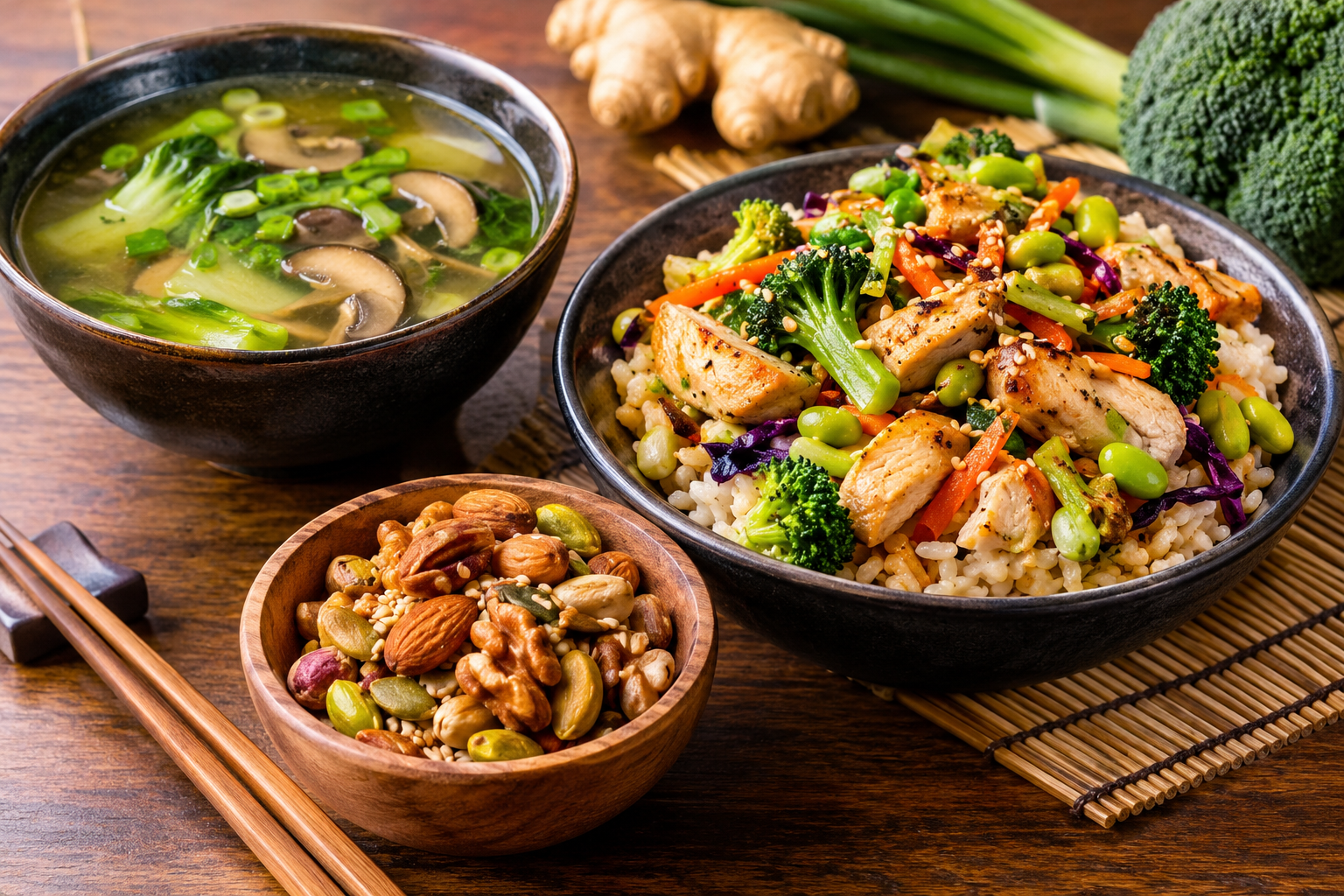
An Asian-inspired, protein-rich meal designed around hydration, vegetables, protein, and fiber.
This meal follows a deliberate eating sequence: begin with a warm, light soup, continue with a protein-rich Asian main course, and finish with a mixture of nuts and seeds. The idea is to create a satisfying meal that supports digestion, provides essential nutrients, and encourages regular bowel movements through a combination of fluids and dietary fiber.
The inspiration comes from East Asian cooking, particularly Chinese and Japanese ingredients, combining ginger, garlic, mushrooms, soy, rice, fresh vegetables, lean protein, and nuts.
The goal isn’t a quick detox or an artificial intestinal cleanse. Instead, the meal incorporates foods that naturally support digestion, satiety, and bowel regularity.
First Course: Ginger, Garlic, and Mushroom Soup
The meal begins with a light, aromatic broth. Starting with soup gives you fluids, introduces vegetables early in the meal, and provides a warm first course without loading the stomach with heavy fats or excessive calories.
Ingredients
-
4 cups chicken broth or vegetable broth
-
1 tablespoon freshly grated ginger
-
3 cloves garlic, thinly sliced
-
1 cup shiitake or oyster mushrooms, sliced
-
1 cup bok choy, chopped
-
2 scallions, sliced
-
1 teaspoon low-sodium soy sauce
-
1 teaspoon rice vinegar
-
1 cup water
-
Pinch of white pepper
Preparation
Place the broth and water into a saucepan. Add the ginger, garlic, mushrooms, soy sauce, and white pepper. Bring the mixture to a gentle boil, then reduce the heat and simmer for 10–15 minutes.
Add the bok choy during the final three minutes so it remains slightly crisp instead of becoming overcooked. Turn off the heat, add the rice vinegar, and finish with sliced scallions.
Serve a small bowl and eat slowly before proceeding to the main course.
Ginger provides its distinctive aromatic flavor, mushrooms contribute savory depth, and bok choy adds vitamins, minerals, and some fiber. The broth also contributes to daily fluid intake, which is important for maintaining normal bowel function.
Main Course: Asian Chicken, Edamame, and Brown Rice Bowl
The main course provides the meal’s primary protein, complex carbohydrates, and substantial fiber. It combines lean chicken with soybeans, vegetables, and brown rice, drawing on familiar Asian stir-fry flavors without relying on heavy sauces or excessive salt.
Ingredients
-
8 ounces chicken breast, cut into bite-sized pieces
-
1 cup cooked brown rice
-
½ cup shelled edamame
-
1 cup broccoli florets
-
½ cup shredded carrots
-
½ cup shredded cabbage
-
1 tablespoon sesame oil
-
1 teaspoon low-sodium soy sauce
-
1 teaspoon fresh grated ginger
-
1 minced garlic clove
-
1 tablespoon lime juice
-
1 teaspoon sesame seeds
-
1 tablespoon fresh cilantro
Preparation
Cook the brown rice according to the package instructions. Brown rice is a good choice because it retains its bran layer, providing more fiber than white rice.
Heat the sesame oil in a skillet over medium heat. Add the chicken and cook until browned and fully cooked, reaching an internal temperature of 165°F (74°C).
Add the garlic and ginger, stirring briefly to release their aroma. Introduce the broccoli, carrots, cabbage, and edamame. Add a small splash of water, cover the skillet, and steam the vegetables for three to five minutes.
Remove the lid, add the soy sauce and lime juice, and stir everything together. Allow the remaining moisture to evaporate slightly, leaving the chicken and vegetables lightly coated rather than swimming in sauce.
Place the brown rice in a bowl, spoon the chicken and vegetables over it, and finish with sesame seeds and fresh cilantro.
Why this course is important
Chicken supplies high-quality protein, which helps maintain muscle and supports tissue repair. Edamame adds additional protein, fiber, and plant-based nutrients. Broccoli, carrots, and cabbage contribute fiber and a range of micronutrients, while brown rice supplies complex carbohydrates and additional fiber.
The combination of protein, vegetables, and whole grains makes the main course satisfying and may help prevent overeating later. It also introduces multiple sources of dietary fiber before reaching the final course.
Final Course: Asian Nut and Seed Digestive Mix
The last stage of the meal is a small mixture of nuts and seeds. This is the final element of the soup-to-nuts concept, providing fiber, healthy fats, minerals, and a satisfying crunch after the main meal.
Ingredients
-
10 almonds
-
2 walnut halves
-
1 tablespoon pistachios
-
1 teaspoon pumpkin seeds
-
1 teaspoon sesame seeds
-
1 teaspoon unsweetened shredded coconut
-
Small pinch of cinnamon, optional
Preparation
Combine the almonds, walnuts, pistachios, pumpkin seeds, and sesame seeds in a small bowl. Place them in a dry skillet over low heat for two to three minutes, stirring continuously. Lightly warming the mixture releases the aroma of the nuts and seeds without requiring added oil.
Remove from the heat and mix in the shredded coconut and cinnamon. Allow everything to cool before eating.
Eat the mixture slowly, chewing thoroughly. Nuts are calorie-dense, so a small portion provides plenty of nutritional value without turning the final course into another large meal.
Nuts contain dietary fiber, which helps add bulk to stool and supports regular bowel movements. They also contain unsaturated fats, magnesium, and other nutrients. Combined with the fiber from the vegetables, edamame, and brown rice, this final course helps make the meal particularly fiber-rich.
Fiber works by helping regulate stool consistency and supporting intestinal movement. Some fibers are also fermented by beneficial bacteria in the colon, producing compounds that contribute to intestinal health.
The nuts do not physically scrape the intestinal walls or remove toxins. Instead, their nutritional components help support the normal functioning of the digestive system.
The Soup-to-Nuts Eating Sequence
| Order | Course | Purpose |
|---|---|---|
| 1 | Ginger broth | Hydration and a light beginning |
| 2 | Chicken and vegetable bowl | Protein, energy, vitamins, and fiber |
| 3 | Nuts and seeds | Fiber, healthy fats, minerals, and satiety |
Eat the courses in order, allowing approximately 5–10 minutes for the soup before moving to the main course. Finish with the nuts, and drink water throughout the meal.
The combination of fluids, vegetables, whole grains, legumes, and nuts creates a meal that may help support bowel regularity, particularly when eaten consistently as part of a fiber-rich diet. If your current diet is low in fiber, increase it gradually to avoid bloating and gas.
The philosophy behind this meal is simple: begin with hydration, nourish the body with protein and whole foods, and finish with fiber-rich nuts. Rather than attempting to force a cleanse, this approach gives your digestive system the nutrients and dietary components it needs to function normally.
It is a complete Asian-inspired meal that is flavorful, filling, protein-rich, and designed with digestive health in mind.
References
-
Harvard T.H. Chan School of Public Health – The Nutrition Source: Fiber
-
Mayo Clinic – Dietary Fiber: Essential for a Healthy Diet
-
Cleveland Clinic – Gut Health and Dietary Fiber
-
USDA – FoodData Central
-
National Institutes of Health – Dietary Supplement Fact Sheets