SPORTS NEWSWIRE | NOVEMBER 12, 2026
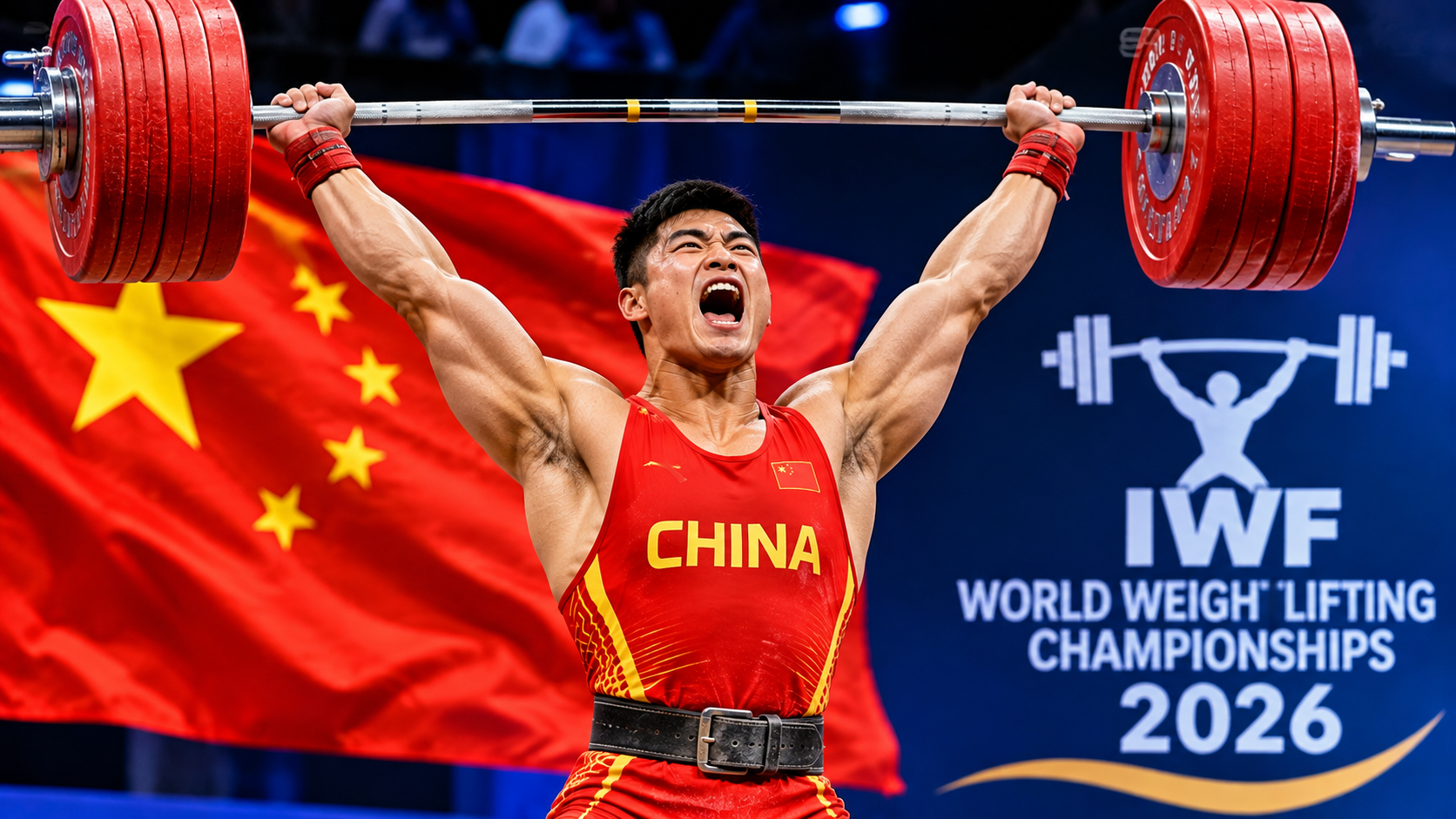
NINGBO, China — China delivered an impressive performance at the 2026 International Weightlifting Federation (IWF) World Championships, collecting 17 gold medals, 10 silver medals and six bronze medals as the world’s strongest weightlifters gathered in Ningbo from October 27 through November 8.
Competing on home soil, the Chinese national team demonstrated its strength across multiple weight categories, producing several outstanding individual performances and setting new world records. The championships attracted more than 500 athletes representing over 90 countries and regions, making it one of the major international weightlifting competitions of the year.
Although China finished with an impressive 33 medals, North Korea actually topped the overall gold-medal standings with 20 gold medals. China’s second-place position in the gold-medal count did little to diminish the significance of its performance, particularly considering the depth of talent displayed throughout the competition.
ecns.cn+1
The championships also carried additional importance because they marked the beginning of the qualification process for weightlifting at the 2028 Los Angeles Olympic Games.
China Makes Its Mark on Home Soil
For China, hosting the championships represented an opportunity to showcase both its long-standing weightlifting tradition and its current generation of elite athletes.
The competition returned to China for the first time in 31 years, bringing international attention to Ningbo, a coastal city in Zhejiang province. The Ningbo Olympic Sports Center served as the primary venue, welcoming athletes, coaches, officials and spectators from around the world.
China entered a full team of 16 athletes, competing in the men’s and women’s divisions. Expectations were high, and the national team responded with gold-medal performances across several categories.
One of the most notable achievements came from Pei Xinyi in the women’s 61-kilogram division. Pei produced an exceptional performance, successfully completing all six of her attempts in the snatch and clean and jerk.
She lifted 112 kilograms in the snatch and 142 kilograms in the clean and jerk, finishing with a combined total of 254 kilograms. Her performance secured all three gold medals available in the category and established new world records.
Her achievement was particularly significant because it represented her return to the international stage after a two-year absence. Pei’s performance also demonstrated that China’s women’s weightlifting program continues to develop athletes capable of competing at the highest international level.
and Kuo is back+1
More Gold Medals Across Multiple Categories
Pei was not the only Chinese athlete to make headlines. Several other members of the national squad delivered performances that reinforced China’s reputation as one of the world’s leading weightlifting nations.
In the men’s 60-kilogram category, Yang Yang opened China’s campaign with gold medals in both the snatch and combined total. His performance was particularly important because it established an early winning momentum for the host nation.
He Yueji added another achievement by winning the men’s 65-kilogram snatch title, further strengthening China’s position in the lighter men’s divisions.
The women’s 53-kilogram category provided another highlight. Zhang Haiqin captured gold in both the snatch and total, narrowly defeating American competitor Ulrey by just one kilogram in the combined standings.
China also demonstrated considerable strength in the heavier women’s categories.
Yang Qiuxia and Peng Cuiting divided the three available gold medals in the 77-kilogram division, demonstrating the depth of China’s talent in a highly competitive category.
Liao Guifang delivered another outstanding performance in the women’s 86-kilogram division, winning all three gold medals. Li Yan followed with an equally impressive performance in the women’s over-86-kilogram category.
Li captured gold in the snatch, clean and jerk and total, while also breaking the world record in the snatch. Her achievement provided one of the most memorable moments of the final competition day on November 8.
ecns.cn
North Korea Takes the Overall Gold Lead
Despite China’s impressive medal collection, the championships produced a significant surprise in the overall standings.
North Korea finished with 20 gold medals, eight silver medals and six bronze medals, placing it ahead of China in the gold-medal rankings.
North Korean lifters produced particularly strong performances in the women’s divisions, demonstrating that the country’s weightlifting program remains a formidable international competitor.
One of the standout athletes was Song Kuk-hyang, who delivered an extraordinary performance in the women’s 69-kilogram category. She secured all three gold medals and established world records in the snatch, clean and jerk and combined total.
Her performance highlighted the growing competitive strength of North Korea and demonstrated that the country’s athletes remain serious contenders for international titles.
The rivalry between China and North Korea provided one of the central storylines of the competition. While China enjoyed the advantage of competing at home and collected 33 medals overall, North Korea’s ability to secure more gold medals demonstrated the increasingly competitive nature of international weightlifting.
KarloBag.eu+1
An Important Step Toward Los Angeles 2028
Beyond the medal standings, the 2026 World Championships carried considerable importance for athletes preparing for the next Olympic Games.
The Ningbo competition served as the first qualifying event in the qualification process for weightlifting at the 2028 Los Angeles Olympics.
For participating countries, this meant that performances were important not only for world championship recognition but also for establishing competitive positions in the Olympic qualification process.
The introduction of the reconfigured Olympic weight categories has also increased the importance of strategic athlete selection. National federations must evaluate their strongest competitors and determine which athletes have the best opportunities to qualify and contend for Olympic medals.
China’s performances in Ningbo provided encouraging indications of its potential heading into the next two years of international competition.
The country’s ability to produce multiple gold-medal contenders across different weight classes gives its coaching staff considerable flexibility when planning for future international events.
However, the performances from North Korea and other competing nations demonstrate that Olympic success will not be guaranteed. The competition for qualification positions is expected to become increasingly intense as the Los Angeles Games approach.
The Global Competition Continues to Grow
The championships also highlighted the increasingly international nature of competitive weightlifting.
More than 90 countries and regions were represented, with athletes competing across 16 weight categories. Competitors from the United States, Colombia, Chinese Taipei, Armenia and several other nations contributed to an event featuring numerous national and world-record performances.
For countries outside the traditional weightlifting powerhouses, the championships provided an opportunity to measure their progress against the world’s best athletes.
The performances also demonstrated how important technical preparation, strength development, coaching and competition experience remain at the highest levels of the sport.
As weightlifting continues toward the 2028 Olympics, the balance of international competition could become increasingly unpredictable.
China Looks Ahead
China’s performance in Ningbo was a major statement from a national program that has consistently produced Olympic and world champions.
Although North Korea finished ahead in the gold-medal standings, China’s 33-medal collection demonstrated remarkable depth across its national squad.
The home championships also provided an opportunity to introduce Chinese athletes to a major international audience while strengthening the country’s position as a leading force in the sport.
With the first Olympic qualification event completed, attention will now turn toward the remaining international competitions and the athletes attempting to secure their places at Los Angeles 2028.
For China, the objective remains clear: convert its impressive world championship performances into Olympic success.
The 2026 championships may have concluded, but the international battle for weightlifting supremacy is only beginning.
References: