The Enhanced Games: Redefining Athletic Competition or Risking Integrity?
In May 2026, Las Vegas will host the inaugural Enhanced Games, an audacious new sporting event where the use of performance-enhancing drugs (PEDs) will not only be allowed but encouraged under medical supervision. Billed as the “Olympics for the enhanced,” this radical shift in competitive sports has garnered global attention—praised by some as a celebration of human potential, condemned by others as a dangerous spectacle that undermines athletic integrity.
A New Vision of Sports
The Enhanced Games were conceptualized by Australian lawyer and entrepreneur Aron D’Souza, who contends that traditional anti-doping rules are obsolete and hypocritical. According to D’Souza, athletes have long found covert ways to enhance performance, so why not create a venue where such practices are not only transparent but regulated? The Enhanced Games aim to focus on five categories: track and field, swimming, weightlifting, gymnastics, and combat sports.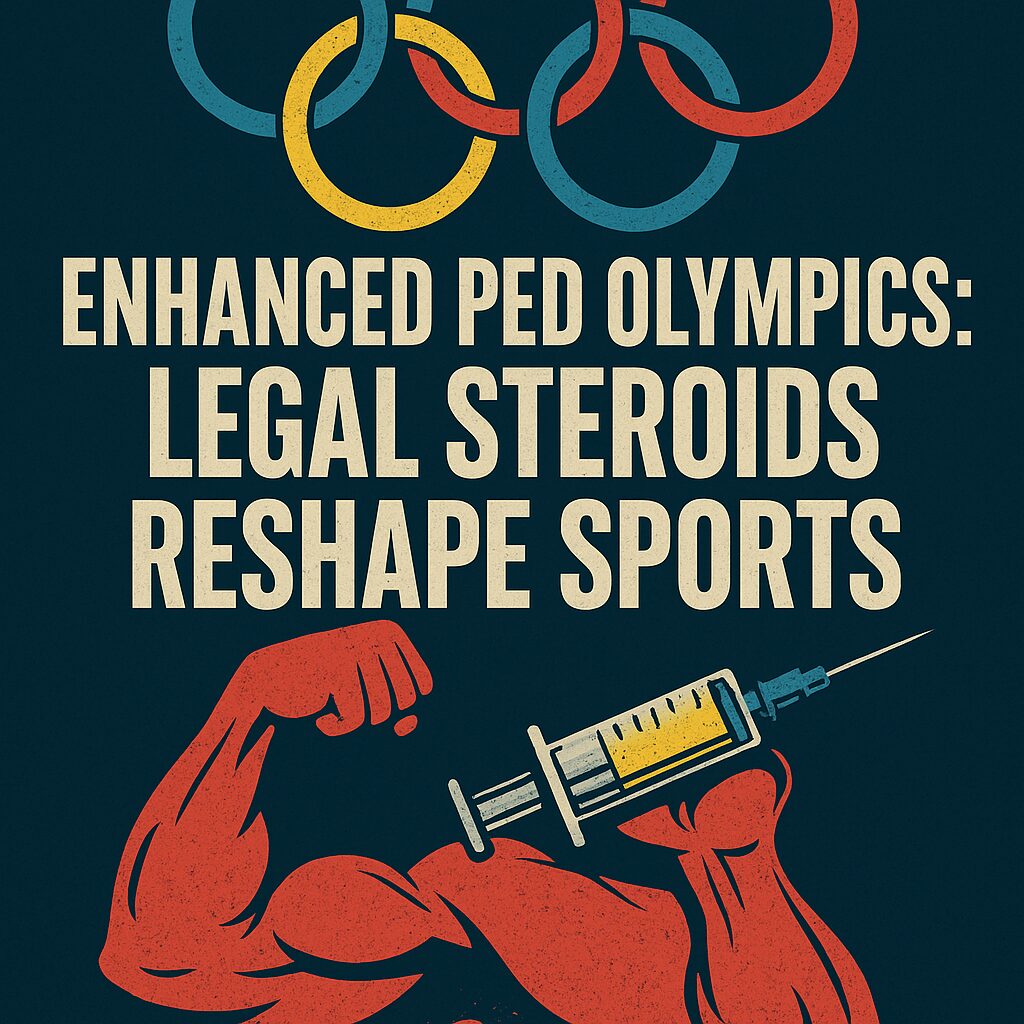
One of the Enhanced Games’ early stars is Greek swimmer Kristian Gkolomeev, who reportedly swam a 50-meter freestyle faster than the current world record during testing—earning a $1 million reward. Organizers claim this is just the beginning of what human bodies, assisted by science, can achieve.
Massive Backing and Public Hype
With backing from Silicon Valley billionaire Peter Thiel, Donald Trump Jr., and other controversial figures, the Games have generated massive media coverage and capital. Supporters argue that the Enhanced Games will bring scientific transparency, medical oversight, and innovation into elite competition. The event, they claim, will remove the stigma around PEDs and push athletes to levels previously unattainable.
Even outside the elite realm, interest in biohacking and legal enhancement supplements is booming. The Enhanced Games appear to be tapping into this cultural shift—redefining what audiences expect from elite athletic performance.
Criticism From Traditional Institutions
The backlash has been swift and severe. The World Anti-Doping Agency (WADA) called the Enhanced Games “a dangerous and irresponsible concept,” warning that it sets a poor precedent for future generations of athletes. The International Olympic Committee, USA Track & Field, and various national governing bodies have echoed these concerns.
Critics warn that normalizing PEDs sends the wrong message, especially to youth. The fear is that the Games could glamorize doping, causing a ripple effect that leads to more young athletes engaging in unsafe or unsupervised drug use in hopes of replicating elite performance.
Health Risks vs. Medical Oversight
Supporters of the Enhanced Games argue that allowing PED use with medical supervision actually reduces harm. Instead of forcing athletes to cheat in secret and without proper guidance, this model encourages open, scientifically monitored enhancement. However, many medical professionals remain skeptical.
While some enhancements—like therapeutic testosterone or selective androgen receptor modulators (SARMs)—can be administered safely in controlled doses, long-term risks remain largely unknown. Heart disease, liver damage, hormonal imbalances, and psychological effects are all documented outcomes of sustained PED use.
Redefining the Spirit of Competition
At the heart of the debate lies a deeper question: What defines sport? Is it the pure demonstration of natural human ability, or is it the pursuit of peak performance by any means necessary? The Enhanced Games challenge the romantic notion of “clean sport,” instead opting to embrace science as a partner in athletic evolution.
Yet the risk is that fairness becomes irrelevant. Will victories still feel earned when the playing field is chemically manipulated? Or will this be accepted as a new norm—just another form of sports evolution, like carbon fiber prosthetics or oxygen chambers?
A Fork in the Road
As the 2026 Enhanced Games draw closer, they’re forcing athletes, fans, and institutions to reflect on the future of sports. Is the world ready for this version of competition? Can rules be rewritten to accommodate both safety and spectacle?
One thing is certain: the Enhanced Games are not just a sporting event. They’re a referendum on how far we’re willing to go in the name of performance—and what we’re willing to risk to get there.
References:
- BBC Sport. (2025). Enhanced Games to allow drug use. https://www.bbc.com/sport/articles/c1j5w5kgn50o
- The Washington Post. (2025). Swimmer beats world record under PED program. https://www.washingtonpost.com/sports/olympics/2025/05/21/enhanced-games-ped-world-record-swimming
- WADA. (2025). Statement on the Enhanced Games. https://www.wada-ama.org
- Financial Times. (2025). Investors back PED-permitted sporting event. https://www.ft.com/content/4c1c9688-935c-4080-b7ff-14b7e89e228f
- USADA. (2025). Why the Enhanced Games are a threat to clean sport. https://www.usada.org/spirit-of-sport/need-know-enhanced-games
Enhanced PED Olympics: Legal Steroids Reshape Sports
Enhanced PED Olympics: Legal Steroids Reshape Sports