

Weightlifting injuries can be frustrating, but they’re also a reminder of the importance of listening to your body and prioritizing recovery. Whether it’s a strained muscle, joint pain, or a more serious issue, the right recovery plan can help you heal safely, regain strength, and prevent future setbacks. This article offers a step-by-step guide to recovering from weightlifting injuries while staying proactive in your fitness journey.
Common Weightlifting Injuries
Weightlifting injuries often result from improper form, overtraining, or lifting weights that exceed your capacity. Common injuries include:
- Muscle Strains: Tears in muscle fibers due to overstretching or overloading.
- Tendonitis: Inflammation of tendons caused by repetitive movements.
- Joint Pain: Discomfort in knees, shoulders, or elbows due to overuse or improper alignment.
- Lower Back Injuries: Strains or herniated discs from poor lifting mechanics.
- Rotator Cuff Injuries: Shoulder issues caused by overhead movements or imbalances.
Understanding the nature of your injury is the first step toward effective recovery.
Step 1: Stop and Assess
At the first sign of an injury:
- Stop Training: Continuing to lift can worsen the injury.
- Evaluate Symptoms: Determine the severity of pain, swelling, or mobility loss.
- Seek Professional Advice: Consult a doctor or physical therapist if the injury is severe or doesn’t improve within a few days.
Step 2: Follow the R.I.C.E. Protocol
For acute injuries, the R.I.C.E. method helps reduce pain and swelling:
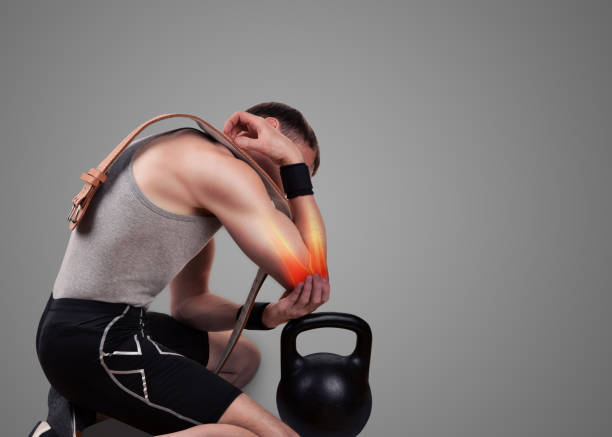
Athlete’s elbow injury during weight lifting, weightlifting. Sprain. On a gray background
- Rest: Avoid activities that stress the injured area.
- Ice: Apply ice packs to the injured area for 15–20 minutes every few hours during the first 48 hours.
- Compression: Use compression wraps to reduce swelling and provide support.
- Elevation: Raise the injured area above heart level to minimize swelling.
Step 3: Gradual Reintroduction of Movement
Immobilization is necessary initially, but prolonged inactivity can lead to stiffness and muscle loss. Once the pain subsides:
- Start with Light Movements: Gentle stretches or mobility exercises help maintain range of motion.
- Focus on Pain-Free Activities: Avoid movements that trigger pain, and prioritize exercises that promote blood flow to the area.
Example: For a shoulder injury, start with pendulum swings or wall slides before progressing to more challenging movements.
Step 4: Strengthen Surrounding Muscles
Weakness in surrounding muscles can contribute to injury recurrence. Work on:
- Core Stability: Strengthening your core supports proper form and reduces strain on other areas.
- Symmetry: Address imbalances between your left and right sides.
- Targeted Rehab Exercises: Perform specific exercises recommended by a physical therapist to rebuild strength in the injured area.
Step 5: Rebuild Strength Gradually
When you’re ready to return to weightlifting:
- Start with Light Weights: Use significantly lighter weights than you were lifting pre-injury.
- Perfect Your Form: Focus on proper alignment and technique to avoid reinjury.
- Increase Volume Slowly: Gradually add more reps, sets, or weight over weeks, not days.
- Use Supportive Equipment: Braces or wraps can provide additional stability during early recovery stages.
Step 6: Address the Underlying Cause
Prevent future injuries by identifying what caused the initial problem:
- Form Check: Work with a trainer to ensure your technique is correct.
- Avoid Overtraining: Stick to a balanced routine with rest days.
- Warm-Up Properly: Dynamic stretches and activation exercises prepare your muscles and joints for lifting.
- Improve Mobility: Tight muscles or limited joint mobility can compromise form.
Step 7: Support Recovery with Nutrition
Proper nutrition accelerates healing:
- Protein: Supports muscle repair. Include lean meats, fish, eggs, and plant-based proteins.
- Anti-Inflammatory Foods: Reduce inflammation with foods like berries, spinach, turmeric, and fatty fish.
- Hydration: Drink plenty of water to maintain tissue health and reduce cramping.
- Supplements: Consider omega-3 fatty acids, collagen, or vitamin D, which may support joint and tissue recovery.
Step 8: Prioritize Rest and Sleep
Sleep is when most healing occurs. Aim for:
- 7–9 hours of quality sleep per night.
- Create a calming bedtime routine to enhance rest.
- Avoid screens and stimulants close to bedtime to optimize recovery.
Step 9: Monitor Your Progress
Keep track of your recovery milestones:
- Pain Levels: Note improvements in discomfort and mobility.
- Strength Gains: Gradually increase resistance in your rehab exercises.
- Return to Normal Activity: Assess when you can resume your full training routine safely.
Step 10: Prevent Future Injuries
Learn from your experience to avoid repeating mistakes:
- Listen to Your Body: Don’t ignore signs of overtraining or discomfort.
- Cross-Train: Incorporate activities like yoga or swimming to improve overall fitness.
- Stick to Recovery Plans: Even after returning to normal training, continue mobility and strengthening exercises for long-term health.
When to Seek Professional Help
If your injury doesn’t improve with at-home care, or if you experience symptoms like intense pain, swelling, or loss of function, consult a healthcare provider. They may recommend physical therapy, imaging, or other treatments.
Conclusion: Lift Smarter, Heal Stronger
Recovering from a weightlifting injury requires patience, discipline, and the right approach. By following these steps, you can safely heal, rebuild your strength, and return to training stronger than ever. Remember, prevention is always better than recovery—so prioritize proper technique, rest, and recovery in your routine.
References
-
Andres, B. M., & Murrell, G. A. (2008). Treatment of tendinopathy: What works, what does not, and what is on the horizon. Clinical Orthopaedics and Related Research, 466(7), 1539–1554. https://doi.org/10.1007/s11999-008-0260-1
Cited for: Explanation of tendonitis and its causes.
-
American Academy of Orthopaedic Surgeons (AAOS). (2022). Preventing Weight-training Injuries. Retrieved from https://www.orthoinfo.org
Cited for: Common weightlifting injuries and prevention strategies.
-
Bleakley, C. M., Glasgow, P., & MacAuley, D. C. (2012). Price needs updating, should we call the POLICE? British Journal of Sports Medicine, 46(4), 220–221. https://doi.org/10.1136/bjsports-2011-090297
Cited for: Updated recommendations on the R.I.C.E. method and its modern alternatives like P.O.L.I.C.E.
-
Hoffman, J. R., & Falvo, M. J. (2004). Protein – Which is Best? Journal of Sports Science & Medicine, 3(3), 118–130.
Cited for: Role of protein in muscle recovery and repair.
-
Hrysomallis, C. (2010). Injury incidence, risk factors and prevention in Australian rules football. Sports Medicine, 40(5), 393–416. https://doi.org/10.2165/11531400-000000000-00000
Cited for: Importance of strengthening and addressing asymmetries in injury prevention.
-
National Institute of Arthritis and Musculoskeletal and Skin Diseases (NIAMS). (2021). Muscle Strain. Retrieved from https://www.niams.nih.gov
Cited for: Understanding muscle strain and recovery basics.
-
Peake, J. M., Neubauer, O., Della Gatta, P. A., & Nosaka, K. (2017). Muscle damage and inflammation during recovery from exercise. Journal of Applied Physiology, 122(3), 559–570. https://doi.org/10.1152/japplphysiol.00971.2016
Cited for: The role of inflammation and recovery in exercise-related injuries.
-
Sleep Foundation. (2023). How Sleep Affects Recovery. Retrieved from https://www.sleepfoundation.org
Cited for: Importance of rest and sleep in injury recovery.
-
Zazulak, B. T., Hewett, T. E., Reeves, N. P., Goldberg, B., & Cholewicki, J. (2007). The effects of core proprioception on knee injury risk. American Journal of Sports Medicine, 35(3), 368–373. https://doi.org/10.1177/0363546506297909
Cited for: Role of core stability in preventing injury.






 * [Santelog – First Steroid Cycle 2025: Experts Discuss Science Behind Beginner’s Guide](https://www.santelog.com/actualites-sante-nasdaq/first-steroid-cycle-2025-experts-discuss-science-behind-beginners-guide?utm_source=chatgpt.com) * [Swolverine – Testosterone for Beginners: Foundation of All Steroids](https://swolverine.com/blogs/blog/testosterone-for-beginners-what-you-need-to-know-about-the-foundation-of-all-steroids?srsltid=AfmBOoqCC-dSYCCLzS_aBUE9R2UrzUwlIeQTThc1SHtn0PrDe-sUv5tK&utm_source=chatgpt.com) * [Swolverine – Ultimate Guide to Post Cycle Therapy](https://swolverine.com/blogs/blog/ultimate-guide-to-post-cycle-therapy-reclaim-your-gains-and-restore-hormonal-balance?srsltid=AfmBOoqIedo-hSzwJWKVyOakO8QOG8Ex4eQPq8T0ZgfbDGumXh4v0gKN&utm_source=chatgpt.com) * [Swolverine – Cycle Length by Compound: Steroids, SARMs, Peptides](https://swolverine.com/blogs/blog/cycle-length-by-compound-steroids-sarms-peptides-full-guide-for-bodybuilders?srsltid=AfmBOop_lD04o8YU_g2b_B6B7MysdBhMn-DjUTpJ2i8gsPVyntVWRFW2&utm_source=chatgpt.com) * [Harley Street MD – Post Cycle Therapy Guide](https://harleystreet-md.co.uk/blog/post-cycle-therapy/?utm_source=chatgpt.com) * [Ro Health – Clomid for Post Cycle Therapy](https://ro.co/erectile-dysfunction/clomid-for-post-cycle-therapy/?utm_source=chatgpt.com) * [Endocrine Society – Press Release: Post-Cycle Therapy Research](https://www.endocrine.org/news-and-advocacy/news-room/2023/endo-2023-press-jayasena?utm_source=chatgpt.com) * [NCBI Bookshelf – Testosterone Cypionate Clinical Use](https://www.ncbi.nlm.nih.gov/books/NBK482418/?utm_source=chatgpt.com) * [PMC – Patterns and Side Effects of Anabolic Steroid Use](https://pmc.ncbi.nlm.nih.gov/articles/PMC10640727/?utm_source=chatgpt.com) --- anabolic steroids, first cycle, beginners guide, testosterone enanthate, testosterone cypionate, bodybuilding tips, steroid cycle plan, post cycle therapy, PCT guide, Clomid, Nolvadex, testosterone suppression, sexual recovery, steroid side effects, safe steroid use, hormone recovery, training optimization, steroid psychology, cycle length, beginner cycle, health monitoring, injection cycle, estrogen control, hormonal suppression, testosterone dosage, recovery protocol, steroid education, controlled cycle, responsible cycle, muscle health](https://steroidology.com/wp-content/uploads/2025/09/istockphoto-597631958-612x612-1.jpg)
